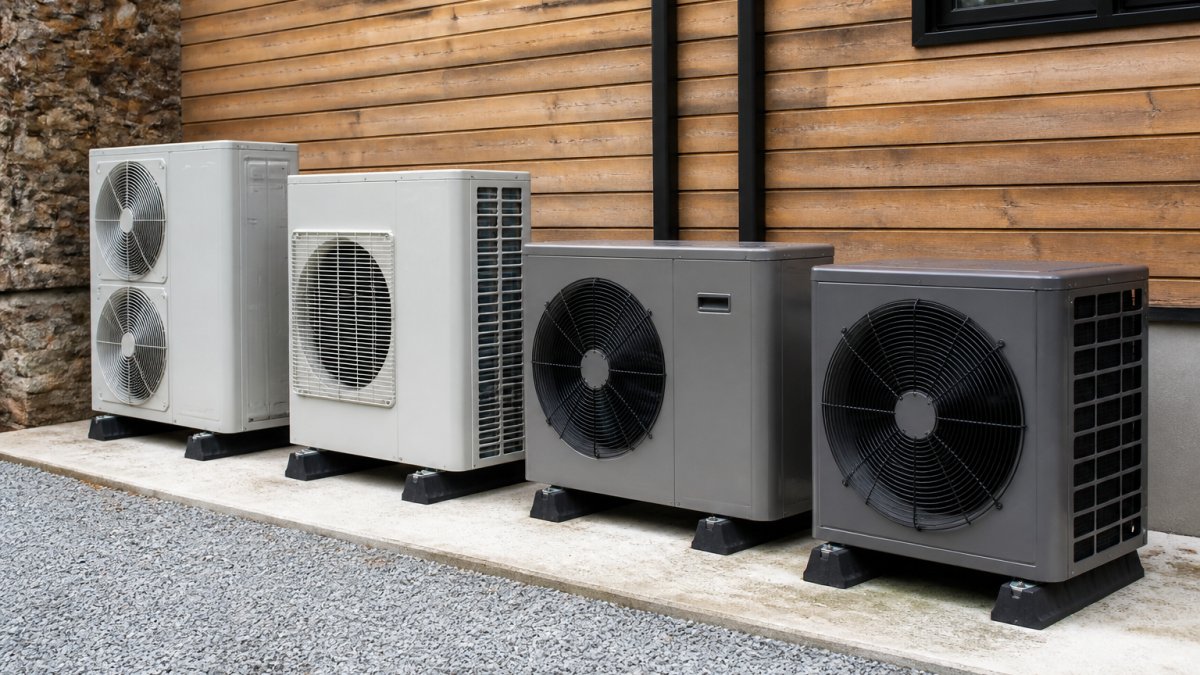
 blog
Best Residential Heat Pump Brands 2026: Top Picks
Last Updated: October 24, 2026
Quick Summary
Mitsubishi Electric and Trane top our reliability shortlist for 2026, with Carrier close behind for service coverage. The best heat pump brands match your climate, ductwork, and how long you plan to stay, so compare cold-climate ratings, compressor warranties, and parts availability before choosing.
- Mitsubishi Electric and Trane top our 2026 reliability shortlist, with Carrier close behind.
- Most major brands offer 10 years on the compressor to the original registered owner.
- Single-zone ductless mini-split systems typically cost $3,500 to $7,000 installed.
- Cold-climate performance is a model-level fact, not a brand-level claim.
- Skipping a Manual J load calculation is the most common cold-climate mistake.
Table of Contents
- Best Residential Heat Pump Brands 2026: Quick Comparison
- How We Ranked the Best Heat Pump Brands
- The Most Reliable Heat Pump Brands for 2026
- Best Cold-Climate Heat Pumps for Low-Temperature Performance
- Residential Heat Pump Cost: What Drives the Price
- Heat Pump Warranty Comparison Across Major Brands
- How to Choose the Right Heat Pump Brand for Your Home
- Frequently Asked Questions
Best Residential Heat Pump Brands 2026: Quick Comparison
Choosing among the best residential heat pump brands in 2026 comes down to matching three things: climate, existing ductwork, and how long you plan to stay. The brands below earn their place on reliability records, parts availability, and cold-weather performance, not marketing spend. This guide from The HVAC Super Store provides information for real houses, not lab conditions.
A heat pump is a whole-house system that moves heat rather than generating it, which is why seasonal efficiency matters more than raw capacity. U.S. Department of Energy heat pump overview explains the basics clearly.
| Brand | Best For | Cold-Climate Rating | Warranty (Compressor) | Standout Strength |
|---|---|---|---|---|
| Mitsubishi Electric | Cold climates, ductless | Excellent | 7-12 years | Variable-speed inverter tech |
| Carrier | Whole-house ducted retrofits | Very good | 10 years | Broad dealer network |
| Trane | Durability, hot-and-cold swings | Very good | 10 years | Two-stage reliability |
| Daikin | Value on ductless mini-splits | Good to excellent | 10-12 years | Wide parts availability |
| Bosch | Quiet operation, efficiency | Very good | 10 years | Inverter-driven comfort |
| Rheem | Budget-conscious replacements | Good | 10 years | Straightforward serviceability |
How We Ranked the Best Heat Pump Brands
We scored each heat pump brand on five weighted factors: reliability history, cold-climate heating capacity, seasonal efficiency ratings, warranty coverage, and parts availability. Installer feedback and serviceability carried real weight. A brand that performs well but takes three weeks to source a control board is a liability in a January cold snap.
Here is the methodology in plain terms:
- Reliability and durability: service call frequency and compressor longevity
- Low-temperature performance: heating capacity retained at sub-freezing outdoor temps
- Efficiency: seasonal ratings and variable-speed versus single-stage operation
Installer quality can matter as much as the badge on the unit. A top-tier brand installed with a mismatched air handler underperforms a mid-tier system sized and commissioned correctly.
The Most Reliable Heat Pump Brands for 2026
Mitsubishi Electric and Trane top our reliability shortlist for 2026. Mitsubishi's variable-speed inverter compressors run at lower, steadier speeds, which reduces wear. Trane's two-stage systems are built for durability in climates with sharp temperature swings.
Reliability is the sum of compressor design, control-board quality, and how quickly a failed part reaches your driveway. Brands with strong parts distribution keep systems running for the full warranty period; brands without it leave homeowners waiting.
- Mitsubishi Electric: best overall reliability, especially ductless mini-splits
- Trane: best for ducted whole-house systems in mixed climates
- Carrier: best service coverage if you value fast repairs over exotic features
Best Cold-Climate Heat Pumps for Low-Temperature Performance
Cold-climate heat pumps deserve more than a brand name. The question is not "which brand is cold-climate?" but "how much heating capacity does this specific model retain at the outdoor temperatures my home actually sees, and what happens when it can't keep up?" That is a model-level question most brand roundups never ask.
What makes a heat pump cold-climate capable
Three mechanisms separate cold-climate units from standard ones:
- Variable-speed inverter compressors. Instead of cycling on and off at full power, the compressor modulates speed to match the load. In mild weather it runs slow and steady; in deep cold it ramps up. This is the single biggest comfort and efficiency difference.
- Enhanced vapor injection (EVI). Some cold-climate models inject vapor into the compression process to boost heating capacity and protect the compressor at low outdoor temperatures. It is a real hardware difference, not a marketing label.
- Low-temperature controls and defrost logic. Cold-climate units manage defrost cycles and refrigerant flow to keep producing heat when coil temperatures drop. Poor defrost logic is a common cause of cold-weather complaints.
The spec that matters: capacity retention
Ignore the headline efficiency rating. The number to find is the model's rated heating capacity at low outdoor temperature, often published at 5°F and 17°F, compared to its 47°F rating.
ENERGY STAR cold-climate heat pump criteria explains how these units are certified for colder regions, and the certification is a useful screen, but it is a threshold, not a ranking.
Brand and model guidance
Mitsubishi Electric's H2i hyper-heating models are the reference point many installers cite for ductless cold-climate performance, with published operation well below 0°F on qualifying models. Daikin's cold-climate lines are a strong alternative with wide parts availability. Bosch's inverter-driven systems are competitive on quiet, efficient operation. Carrier and Trane offer cold-climate ducted options backed by broad dealer networks. The brand matters less than the specific model's expanded performance data and the quality of the install.
Backup heat: the safety net, not the plan
Most cold-climate systems include electric resistance backup heat for two jobs: covering the gap on the coldest design days and providing heat during defrost cycles. It is not meant to run as primary heat. If your backup strips run constantly, the system is undersized, misconfigured, or not actually cold-climate capable.
Refrigerant transition and long-term serviceability
The refrigerant landscape is shifting. Newer refrigerants with lower global-warming potential are entering the market, and manufacturers are transitioning model lines (the EPA). For a 2026 purchase, ask your installer which refrigerant the model uses, whether service parts and refrigerant will remain available for the life of the system, and whether the model line is being discontinued. A great-performing unit that becomes hard to service in eight years is a poor long-term buy.
Residential Heat Pump Cost: What Drives the Price
Residential heat pump cost is a stack of decisions, system size, efficiency tier, duct condition, electrical service, and climate, and two homes on the same street can land thousands of dollars apart. The table below shows typical installed cost ranges for 2026, before rebates or tax credits. Treat these as planning ranges, not quotes; your installer's Manual J load calculation and site visit set the real number.
| System Type | Typical Installed Cost (USD) | Typical Home Fit |
|---|---|---|
| Single-zone ductless mini-split | $3,500-$7,000 | One room, addition, garage, or no-duct home |
| Multi-zone ductless mini-split (2-4 zones) | $8,000-$16,000 | Homes without ducts or with hard-to-reach rooms |
| Ducted whole-house, standard efficiency | $8,000-$14,000 | Existing serviceable ducts, mild-to-mixed climate |
| Ducted whole-house, high-efficiency cold-climate | $12,000-$20,000+ | Cold climate, variable-speed, cold-climate rated |
| Duct replacement or major duct sealing (add-on) | $3,000-$8,000 | Leaky, undersized, or poorly routed existing ducts |
| Electrical panel or circuit upgrade (add-on) | $1,000-$4,000 | Older homes adding a 240V circuit or capacity |
What actually moves the price
- Capacity and sizing. A larger home needs more capacity, and capacity scales cost. An oversized unit costs more upfront and short-cycles, which shortens life.
- Efficiency tier. Variable-speed inverter equipment costs more than single-stage, but it modulates output and usually cuts annual energy use. The premium is real; so is the payback.
- Ductwork condition. Retrofitting a ducted system into a home with leaky or undersized ducts can add thousands. Ductless avoids duct cost but adds a wall penetration and line-set run per zone.
Total cost of ownership beats sticker price
The purchase price is only the first check you write. Total cost of ownership adds installation, annual energy use, maintenance, and replacement timing. A high-efficiency cold-climate system that costs $4,000 more upfront can recover that premium over its service life in a cold climate through lower winter energy use, but may never pay back in a mild climate.
Maintenance is modest but not zero: plan on annual professional service and regular filter changes. A system that is never serviced loses efficiency and life.
Rebates and tax incentives change the effective price
Federal tax credits, utility rebates, and state or local programs can meaningfully reduce the net cost of a qualifying high-efficiency or cold-climate unit. Rebates and incentives can lower the effective price of a qualifying system. Programs and eligibility change, so confirm current terms with your utility and a tax professional before you sign.
For current equipment pricing, browse heat pumps and mini splits at wholesale pricing.
Heat Pump Warranty Comparison Across Major Brands
Warranty coverage varies widely, and the compressor term is the number that matters most. Most major brands offer 10 years on the compressor to the original registered owner, with some extending to 12 years on premium lines.
| Brand | Compressor Warranty | Parts Warranty | Registration Required |
|---|---|---|---|
| Mitsubishi Electric | 7-12 years | 5-10 years | Yes |
| Carrier | 10 years | 10 years | Yes |
| Trane | 10 years | 10 years | Yes |
| Daikin | 10-12 years | 10 years | Yes |
| Bosch | 10 years | 10 years | Yes |
| Rheem | 10 years | 10 years | Yes |
Register the unit. An unregistered system can default to a shorter base warranty, and that gap is where homeowners get burned. Keep your installation paperwork with the equipment serial numbers.
How to Choose the Right Heat Pump Brand for Your Home
Match the brand to your home before you match it to a spec sheet. A 1970s house with odd ductwork needs a different answer than a new build with clean, sized ducts.
Work through this decision framework:
- Cold climate plus no ducts: Mitsubishi Electric or Daikin ductless
- Existing ductwork, mixed climate: Carrier or Trane ducted
- Quiet operation is the priority: Bosch inverter systems
Once you have picked a brand, look at the ongoing energy savings it delivers in your climate zone. A slightly higher-efficiency unit often pays back over its service life.
Frequently Asked Questions
What is the most reliable brand of heat pump?
Reliability comes down to compressor quality, parts availability, and how well the system is sized and installed. Brands with strong dealer networks and widely stocked replacement parts tend to score best because repairs happen faster. A top-tier unit installed poorly will underperform a mid-tier unit installed correctly, so vet your installer as carefully as the brand. Ask about local parts availability and average repair turnaround before you buy.
Which heat pump brands perform best in cold climates?
Look for cold-climate heat pumps rated to deliver full heating capacity at low outdoor temperatures, often using variable-speed inverter compressors. These models hold capacity better than standard single-stage units and rely less on electric resistance backup heat. Check the manufacturer's published capacity tables at your design temperature rather than the headline rating. Pairing a cold-climate model with a properly sized backup heat source keeps operating costs predictable through winter.
How much does a residential heat pump cost?
Residential heat pump cost depends on system size, efficiency tier, ducted versus ductless design, and whether your home needs ductwork changes. Installation labor and any electrical upgrades add to the equipment price. Because pricing varies by configuration and quantity, check The HVAC Super Store's website for current wholesale pricing. Rebates and tax incentives can offset part of the total, so confirm eligibility before ordering.
Which heat pump brands offer the best warranties?
Warranty coverage varies by brand and model line, typically covering the compressor longer than other components. A heat pump warranty comparison should look at both length and what is excluded, plus who handles the claim, the manufacturer or the seller. Register your system promptly, since many manufacturers require it to activate full coverage. Keep installation records, because proof of professional installation is often required for a claim to be honored.
The hard part is not picking a brand. It is getting the right system, sized correctly, at a price that reflects wholesale rather than retail markup. The HVAC Super Store sells heat pumps, mini splits, furnaces, and AC systems direct at wholesale pricing, ships to your door, and offers professional installation support locally. Browse the full lineup to compare models, confirm sizing, and get your project moving.
