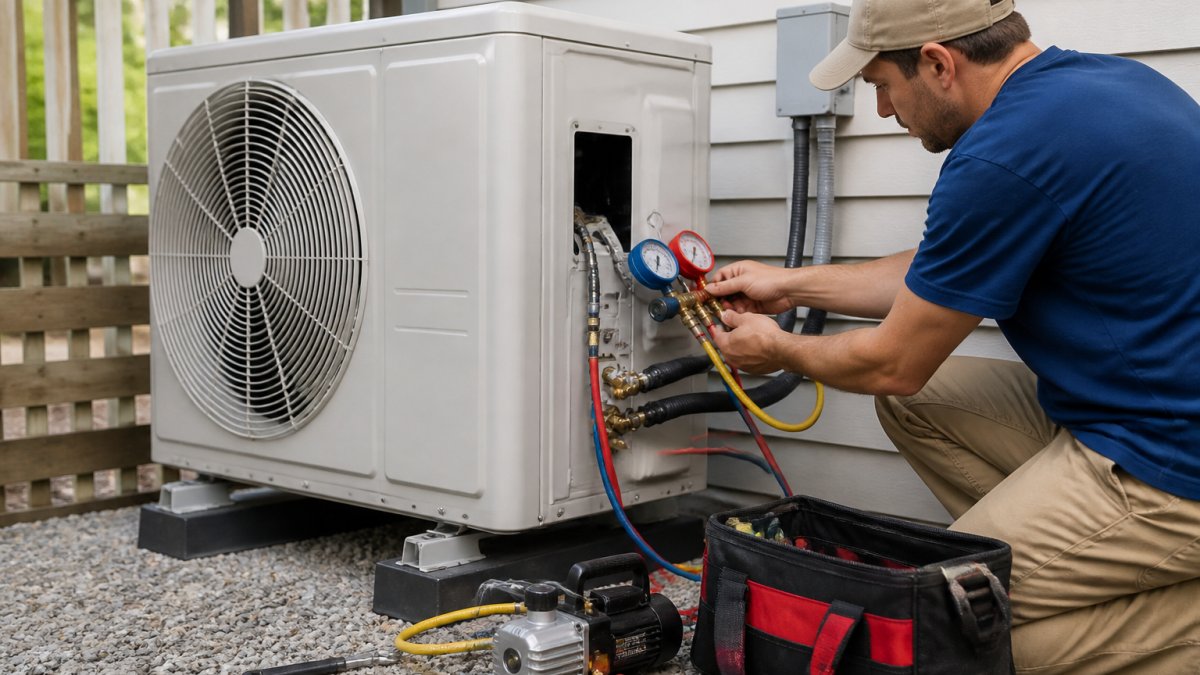
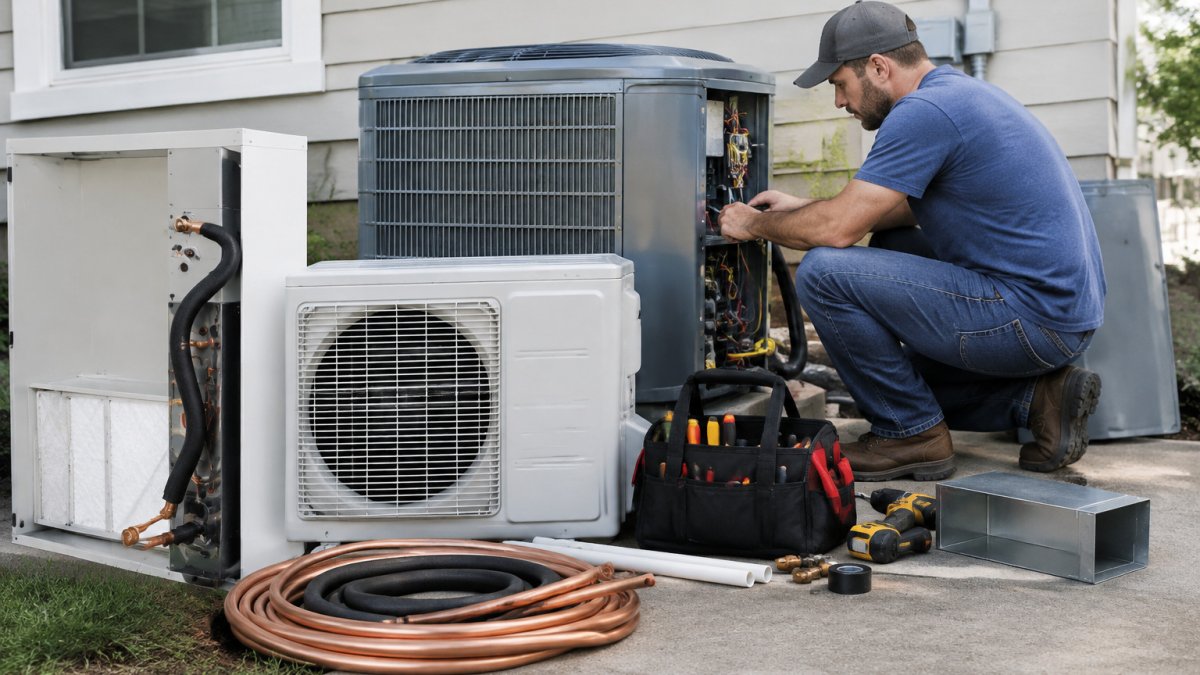
 listicle
7 Best HVACDirect Alternatives for DIY Homeowners
Last Updated: November 4, 2026
Quick Summary
The best hvacdirect alternatives for DIY homeowners include The HVAC Super Store for wholesale pricing with local installation backup, MRCOOL for true DIY mini split installs, and Pioneer, Senville, Alpine Home Air, Ingrams Water & Air, and SupplyHouse for budget systems, sizing help, bundles, and parts. Confirm warranty terms on self-install and freight details before you pay.
- MRCOOL offers true DIY mini split models that need no refrigerant charging.
- Alpine Home Air provides in-house sizing review and contractor referral for homeowners.
- SupplyHouse suits parts, line sets, and accessory orders rather than full systems.
- Check whether warranty coverage requires professional installation before buying.
- Note any freight damage on the delivery receipt and photograph it before the driver leaves.
Table of Contents
- Quick Comparison: 7 HVACDirect Alternatives at a Glance
- How We Evaluated These Online HVAC Suppliers
- 1. The HVAC Super Store: Wholesale Pricing With Installation Backup
- 2. MRCOOL: The True DIY Mini Split Alternative
- 3. Pioneer and 4. Senville: Budget Mini Split Brands Worth a Look
- Where to Buy HVAC Equipment Online Without a Contractor Account
- Matching HVAC Equipment for DIY Homeowners to the Right Project
- What to Check Before You Buy Your Own HVAC Equipment
- Frequently Asked Questions
Quick Comparison: 7 HVACDirect Alternatives at a Glance
If you're hunting for best hvacdirect alternatives for diy homeowners, the short answer is this: the right supplier depends on what you're installing, whether you can buy without a contractor account, and whether the warranty survives a self-install. At The HVAC Super Store, we sell heat pumps, mini splits, furnaces, and AC systems direct at wholesale pricing, so we know exactly what separates a good DIY supplier from a frustrating one.
Buying HVAC equipment online is easy. Getting the right system, with a warranty that holds up and support when something goes wrong, is where homeowners get burned. Below, we break down seven alternatives by eligibility, shipping, and support, so you can pick with your eyes open.
| Supplier | Best For | Contractor Account? | Warranty on Self-Install | Freight & Delivery | Support Model |
|---|---|---|---|---|---|
| The HVAC Super Store | Wholesale buyers wanting install backup | No | Manufacturer warranty; confirm registration terms at checkout | Direct-to-door freight; inspect at delivery | Direct shipping + local install support |
| MRCOOL | True DIY mini split installs | No | Manufacturer warranty on DIY models; register the unit | LTL freight for condensers; curbside delivery | Manufacturer DIY kits and phone support |
| Pioneer | Budget mini split shoppers | No | Manufacturer warranty; professional install often required for full term | LTL freight; liftgate may cost extra | Brand-level support |
| Senville | Budget mini splits with sizing help | No | Manufacturer warranty; confirm self-install clause | LTL freight; residential delivery appointment | Brand-level support and sizing tools |
| Alpine Home Air | Homeowners who want a sizing and quote process | No | Manufacturer warranty; installation by licensed tech preserves full term | Freight with delivery scheduling | In-house sizing review and contractor referral |
| Ingrams Water & Air | Bundled systems and accessories | No | Manufacturer warranty; some brands restrict online sale | Freight; parts ship separately | Phone and email technical help |
| SupplyHouse | Parts, line sets, and accessories | No | Varies by brand; parts-only orders common | Ground and freight; fast on consumables | Catalog-style support |
Two columns deserve a closer look before you order anywhere. First, warranty on self-install: warranty terms for self-installed equipment vary by manufacturer, so read the warranty document before you buy. Second, freight and delivery: check how your equipment ships and whether you need to be present to inspect it and note any damage on the delivery receipt before you sign.
A common pattern among DIY buyers is to compare only the equipment price and ignore the accessories and freight that complete the job. Line sets, wall brackets, drain hose, pad, disconnect, whip, and breaker can add meaningful cost to a single-zone mini split, and ordering them from separate suppliers can mean separate freight charges. Confirm which parts a supplier carries before you order.
Watch out: a supplier that lets you add a system to your cart without a contractor account may still route your order through a verification step, or sell you a unit whose manufacturer warranty requires professional commissioning. Confirm both before you pay, and keep the order confirmation and delivery receipt.
How We Evaluated These Online HVAC Suppliers
This guide compares options on three things: who's allowed to buy, how equipment ships, and what happens after delivery. Eligibility matters because some suppliers quietly require a contractor account. Shipping matters because freight damage on a mini split is a real headache. Support matters because a system that fails in year two needs a warranty path, not a phone tree.
Eligibility, Shipping and Support: Our Scoring Criteria
- Eligibility: Can a homeowner buy without a contractor license or business account?
- Shipping: Direct-to-door freight, delivery terms, and how damage claims work.
- Support: Installation guidance, technical help, and warranty backing.
- Product range: Brands, sizes, and whether parts and accessories ship too.
One note before you order anywhere: confirm delivery terms and current pricing on the supplier's site, since freight and stock shift by season. You can also buy HVAC units direct, shipped to your door to see shipping terms and delivery details.
1. The HVAC Super Store: Wholesale Pricing With Installation Backup
The HVAC Super Store sells heat pumps, mini splits, furnaces, and AC systems at wholesale pricing, shipped direct to your door, with professional installation support available for customers in the Long Island area.
The HVAC Super Store offers a wide selection of equipment, parts, and accessories. If you want to understand how the DIY support side works before committing, you can read how installation support for DIY projects works.
Pros:
- Wholesale pricing on a wide equipment range
- Direct-to-door shipping
- Installation support for local customers
Cons:
- Installation support is limited to the local service area
Best for: DIY homeowners and small contractors who want wholesale equipment and local installation support. Skip if: You're outside the installation support area.
2. MRCOOL: The True DIY Mini Split Alternative
Pros:
- True DIY mini split design
- Ductless heating and cooling for rooms without ductwork
- No refrigerant charging needed on DIY models
Cons:
- Product pricing varies by model and isn't listed here
- Installation requirements differ per model, so check specs first
3. Pioneer and 4. Senville: Budget Mini Split Brands Worth a Look
Pros:
- Budget-oriented pricing tier
- Ductless mini split options
- DIY-friendly for prepared homeowners
Cons:
- Not true DIY systems; install prep matters
- Prices and specs vary, so verify per model
Where to Buy HVAC Equipment Online Without a Contractor Account
You can buy HVAC equipment online without a contractor account from direct-to-consumer suppliers, brand stores, and wholesale platforms that sell to homeowners. The key is confirming eligibility before checkout, because some sites let you browse freely but require a business account at payment.
When you're ready to buy, you can browse heat pumps, mini splits, furnaces and AC systems shipped to your door and compare what fits your project. Confirm the voltage and breaker requirements match your electrical panel before ordering.
Matching HVAC Equipment for DIY Homeowners to the Right Project
Match equipment to the project, not the other way around. A single room with no ductwork calls for a ductless mini split. A whole-house replacement with existing ducts points to a central system or furnace. A condo or rental often suits a window unit or portable air conditioner where permanent installation isn't allowed.
System sizing is where DIYers slip most. Square footage is a starting point, but ceiling height, insulation, window count, and climate all shift the load. If you're unsure, calculate your home's HVAC load before you order, because an oversized unit short-cycles and an undersized one never keeps up.
What to Check Before You Buy Your Own HVAC Equipment
Before you buy your own HVAC equipment, verify four things: warranty coverage, permit requirements, refrigerant handling rules, and return policy. Skipping any of these is how a cheap purchase turns into a costly one. Most guides stop at naming those four categories. The useful part is knowing what each one actually looks like on paper, because the details are where DIY buyers lose money.
- Warranty: Confirm whether coverage requires professional installation. Many manufacturers shorten or void coverage on DIY installs, and the clause usually lives in the installation requirements section of the warranty document, not the marketing page. Look for language like "must be installed by a licensed contractor" or "proof of professional installation required." If the unit is a pre-charged quick-connect DIY model, the manufacturer has generally designed the warranty around homeowner installation, but you still have to register the unit within the stated window, often 60 days, and keep the receipt. The seller is not the warranty administrator; the manufacturer is, so know which phone number to call before year two.
- Permits and code: Permit requirements for HVAC work vary by jurisdiction. Check with your local building department about whether a permit is required for your project and who may pull it. Electrical work is a separate question: adding a dedicated 240-volt circuit for a mini split typically requires an electrician and a permit, and that cost belongs in your budget before you order.
- Refrigerant: Pre-charged DIY systems avoid this, but standard splits need a licensed technician for refrigerant work. Refrigerant handling is regulated, so check current federal and local requirements before doing any refrigerant work yourself. If you buy a standard split to save money, budget for a technician to commission it, or the system will not run correctly and the warranty may not apply.
- Returns: Read the return policy before ordering. Check the return window, any restocking fee, and who pays return freight. Damage claims are different from returns, if a unit arrives damaged, note it on the delivery receipt and photograph it before the driver leaves.
To protect yourself, verify your HVAC warranty coverage before you commit, and keep every document. Confirm the electrical panel can carry any new circuit before ordering.
Frequently Asked Questions
Can a homeowner replace their own HVAC system?
Whether you can install equipment yourself depends on your local rules and the type of system. Central systems involve refrigerant lines, electrical connections and permits, while some ductless mini splits are designed to be more manageable for homeowners. Refrigerant handling is regulated, so check current federal and local requirements. Check your local building department before ordering, and confirm whether a permit and inspection are required for the work you plan to do.
What should DIY homeowners compare when buying HVAC equipment online?
Compare more than the sticker price. Look at whether the supplier sells to homeowners without a contractor account, what the freight and delivery terms are, who honors the warranty (the manufacturer or the retailer), and whether technical support is included. Also check the published efficiency rating, electrical requirements and available capacity for your space. Warranty and support terms matter as much as the purchase price.
Do online HVAC retailers offer installation support?
Support varies widely by supplier. Some online sellers ship equipment only and leave installation entirely to you or your chosen contractor. Others, like The HVAC Super Store, pair direct-to-door shipping with professional installation support for customers in the Long Island area. If you are outside that area, ask the supplier about its options and confirm in writing that a local licensed technician can install the unit without voiding the warranty.
What is the $5,000 rule for HVAC systems?
Some homeowners use a rough rule of thumb to decide between repair and replacement, comparing the cost of a repair against the age of the system and the price of a new one. It is not an official standard. Before you apply it, get a written equipment-only quote and a separate installation quote so you can compare the real total.
Can you buy a complete HVAC system online?
Online suppliers can sell equipment packages, and what a package includes varies. Labor, permits and refrigerant commissioning are usually handled separately and often need a licensed technician. When you buy HVAC equipment online, confirm the package includes everything needed for your configuration, ask about delivery terms, and verify the system sizing before you order.